If I Walk Behind You
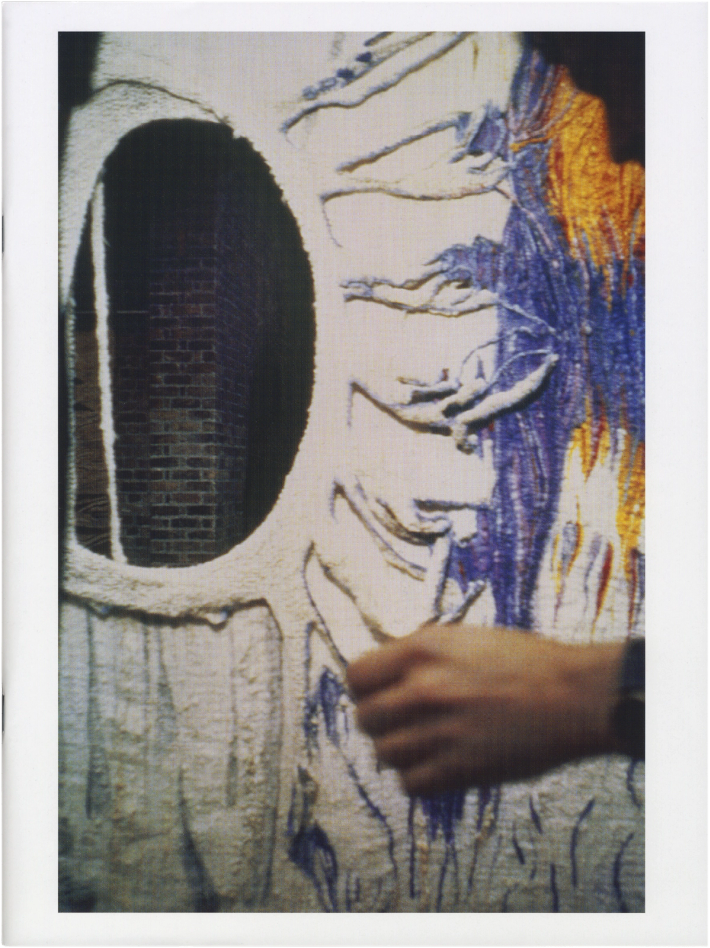
I engaged in a six-month conversation with artist Natasha Macvoy in the run-up to her exhibition at Eastside Projects in Birmingham. I ended up writing this experimental text in which I assume a first-person voice that is Natasha’s in which we talk about stunt performers, empathy, death and fake injuries. The text was available for visitors to take away with them in printed form, but Natasha also turned my words into a film that was projected in the gallery spaces.
if I walk behind you and try to imagine what it feels like to move like you, listen and think like you, can I become closer to you, protect you, pave the way for you?
if I do this again and again, can I become invisible?
if I invert my assumptions, we can perhaps question who is guiding who here?
if I sit cross-legged on the ground, I am able to pay more attention and focus on what matters. I feel a sense of defiance - the same, I imagine, as that of students and small children who use all that is available to them, the physical reality of their bodies, to make a claim, decry a situation, state a desire. If I sit here long enough, will they hear my plea for more care and consideration to be given to those who see and experience the world differently? To enable you to live your lives without constant recourse to private, protected, cut off worlds.
if I think about my estranged father, I think about the Death Club I set up after he died. He gave me a copy of his CV as a summary of his life. Along the top, he had written 'Born 1941. Married with three adult children. Clean driving licence.' A year later, two friends died who had collaborated on a tattoo on my arm. They never met, but I spoke at length about death and life with both of them, and for this club I wanted to create a space in which things could be said that often remain unsaid. Long before he was diagnosed with prostate and lung cancer, my father started a 5.31 club which involved meeting in a pub immediately after work each day. It’s likely that members of my club and his club would have had a lot to talk about.
if I read this text aloud, does the meaning shift? If the voice inside my head is projected out into the world, does it assume an audience, an exterior life, that enables it to reach beyond an internal dialogue towards something that is more ‘real’? Or should I recognise that there is already an ‘other’ in my head when I use language – that this is the way I locate myself in the world, using this second person voice? Siri Hustvedt puts it well: In language we represent the passage of time as we sense it - the was, the is, the will be. We abstract and think and we tell. We order our memories and link them together, and those disparate fragments gain an owner: the "I" of autobiography, who is no one without a "you." For whom do we narrate, after all? Even when alone in our heads, there is a presumed other, the second person of our speech. This constant questioning about where and how to locate myself, how can I harness it in order to move me close to you?
if I google ‘stunt man’ I summon Yakima Canutt, an American rodeo rider, cowboy, and stand-in for many Hollywood actors. He died in 1986 at the age of ninety-one. A long life for someone so willing to fling themselves into someone else’s oblivion. He developed a complex array of techniques to protect himself and other stunt men from injury, while perfecting the art of making artificially constructed violence, catastrophe and death look real. The artist and writer Mary Walling Blackburn has suggested that viewers, in watching these films ‘indulge in the sorrows of others in order to defer the trauma of their own grief.’ There is something comforting about the fact that someone (in this case Canutt), is willing to pave the way, one step removed, to the insistence of our denial.
if I lie down on the grass and look up at the sky, I fabricate a hazy daydream that the clouds are ethereal bodies, full of life and emotions. I invite each one to swell with anger or dance with joy, before moving on, with no sense of impingement, self-consciousness or constraint.
if I bring all these ideas together here, in the kitchen with you watching TV, is it still art? Where do I, you, the art, begin and end?
if I invite this wig-maker to be part of my project, do my intentions become clearer? She is constructing an identity for those who wish – or need – to look different. Through this complex, intricate, time-consuming task, she is creating the conditions for doubling, masking, and rehearsing. These are tactics I constantly employ, as I move through the logistics, challenges, and richness of caring for you each day.
if I tell you a story about where I bought a wig that matches the back of my head, will you think it strange? I found a Bristol-based hair and make-up specialist online. Her workshop was in a garage next to her house on the edge of town. She answered the door wearing a heavy, purple tweed suit. It was a particularly hot day. We moved past a section of prosthetic limbs to reach the shelves of wigs that were displayed on white, mute polystyrene heads. The wig-maker’s deceased husband created the fake injuries for Casualty, and she worked on hair and make-up for crime reconstructions. We talked about one reconstruction she did that I remembered from the early 2000s, based on a woman - Melanie Hall - who had gone missing outside Cadillacs nightclub in Bath. She explained that it is usually policewomen who act as female victims in reconstructions, because they are well acquainted with the case - trauma and vulnerability are rarely recognised as dangerous side-effects of the job.
if I am confused about where I end and you begin, I guess that is to be expected.
if I try to comprehend, or even think about, the relationship between my brain and my mind, I am dumbfounded. I want to outsource the work to another brain, to ensure a non-partisan approach, one that recognises that my involvement would sully the observations. I want to come closer to an understanding of ‘the self’, in order to move towards a place where I can begin to see how my self interacts with your self.
if I walk with Susan Lynch, who is you and also someone else, the conversation naturally leads to Happy Valley, a phenomenal piece of TV writing, acting, and directing that she was part of. Women living through trauma, holding things together, watching things fall apart, creating the conditions for others to hold things together. Everyone forever failing, holding and falling.
if I question whether it is possible to imagine life in another body, I am reminded of Leslie Jamison’s essay The Empathy Exams. She takes a job as a medical actor who must feign symptoms whilst drawing on a backstory that provides motivation for her character (‘Appendicitis Angela has a dead guitarist uncle whose tour bus was hit by a tornado’). Through these constructed narratives and fragile, speculative catastrophes, trainee doctors try to guess her maladies and learn the art of simulated empathy. Jamison’s conclusion is that empathy is hard work, ‘made of exertion, that dowdier cousin of impulse’. I am aware that, as Jamison points out, ‘empathy is ..perched precariously between gift and invasion’, but my attempts to think through your body, your mind, your approach to the world – are they working??
if I think about stunts, I inevitably think about performances with unplanned endings. They aren’t the same thing, but you can see how they might get confused. Bas Jan Ader knew that when he went out to sea and never came back, he was embarking on a performance with an unplanned ending. Maybe he had no idea what would become of him, but his search for the miraculous fits the narrative that he was, in some way, searching for death.
if I change the fabric of my world to create a world for you, will you fall back on it, use it, feel safe in it? Will you find a way of constructing your own some day?