From Breath to Dust
I was writer in residence for the artist-run OD Festival in Somerset in 2025. In response to the festival, I wrote the following text in which I embark on a circular journey, starting in Somerset, visiting the underworld, travelling through the earth, and coming out the other side.
Along the way, I meet Hades; chthonic deities, TS Eliot’s ashes; artworks by Patrick Keiller, Mónica Rivas Velásquez, Michelle Atherton, Libby Bove, Simon Lee Dicker, Yelena Popova, and t l k; characters from books that fall into madness; ancient holloways, abjection and raw being.
It’s best experienced as a spoken-word piece, which you can listen to here.
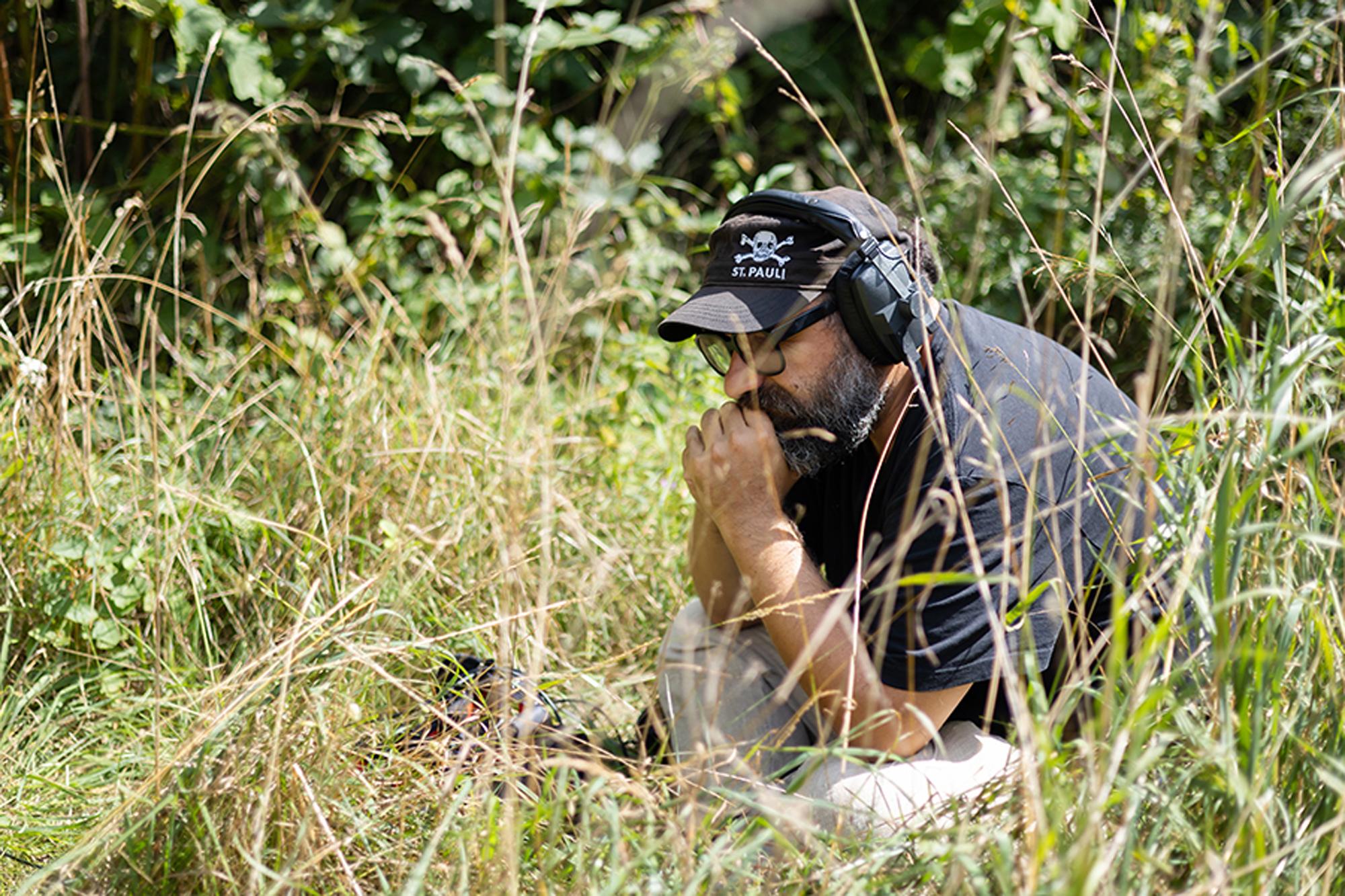
To reach the underworld, I walk on grass, tarmac, roots, concrete and soil. It’s not a long journey, but it’s more than likely that I kill a number of insects, fungi, and other microcosms along the way. I sit in a field and place headphones on my ears. I look up at the sky. I am on the surface of the Earth, hurtling through space at 1,000 mph but all is still, just faintly twitching. My torso is rising and falling, air is inhaled and exhaled into and out of my body, the beating of my heart dictates the terms of my existence. In my pockets there is a train ticket (I have come from somewhere!), tissues, an OD Festival badge, my phone. I am a body in the overworld listening to the sounds of the underworld through a series of wires and alchemical processes. It is an experiment in the transformation of one form of energy into another and I am stunned by what I hear.
There is a continuous electronic hum; a boat clanking against a dock; doors banging, shutting, creaking; things croaking, clicking, reverberating, drilling, knocking; heavy boxes being dragged across a floor; things under water, drowning, living, screaming. For something that looks so solid and can hold such weight, the underworld is fantastically mutable, noisy and teeming with life. Occasionally, bits of the upperworld seep into the soundscape: atmospheric chatter produced by plants, dogs, birds and people. This bleeding no doubt continues to unfold between the overworld and the heavens. There is always bleeding. Everything is porous.
In the world of myth and religious story-telling, the underworld assumes an altogether more malevolent character. There are fights and factions, spirits dying and dead, tantrums and dissonance. This hellish landscape is dark, unknown and unseeable. It is inhabited by chthonic deities and associated with a heady mix of death and fertility. There’s Hades, God of the Underworld, moaning about how expensive it is to keep a three-headed dog. His wealth doesn’t stem his sense of resentment that his brothers got the better deal – Zeus, the sky, and Poseidon, the sea. More horizon and access to clarity in both these worlds, he thinks. The lack of sunlight in the underworld means that Hades suffers from bone pain and muscle weakness; his skin is horribly sensitive and comes off in huge flakes. On the upside, he’ll probably outlive his siblings.
In the inner workings of our minds, the underworld presents as an existential void, carrying abjection and raw being. Characters in books and films enter the underworld by falling into madness, crossing a threshold, tipping into an inner decent where bad things happen. It is a place of transformation, inversion, initiation. A journey into the depths of the self.
A muffled voice - coming from somewhere far away – enters my consciousness. It becomes more insistent and I blink my eyes open. I re-enter the overworld reluctantly. I felt soothed by those murky depths, like my body was in a fluid, blind state, and now I must negotiate gravity, people, the sun.
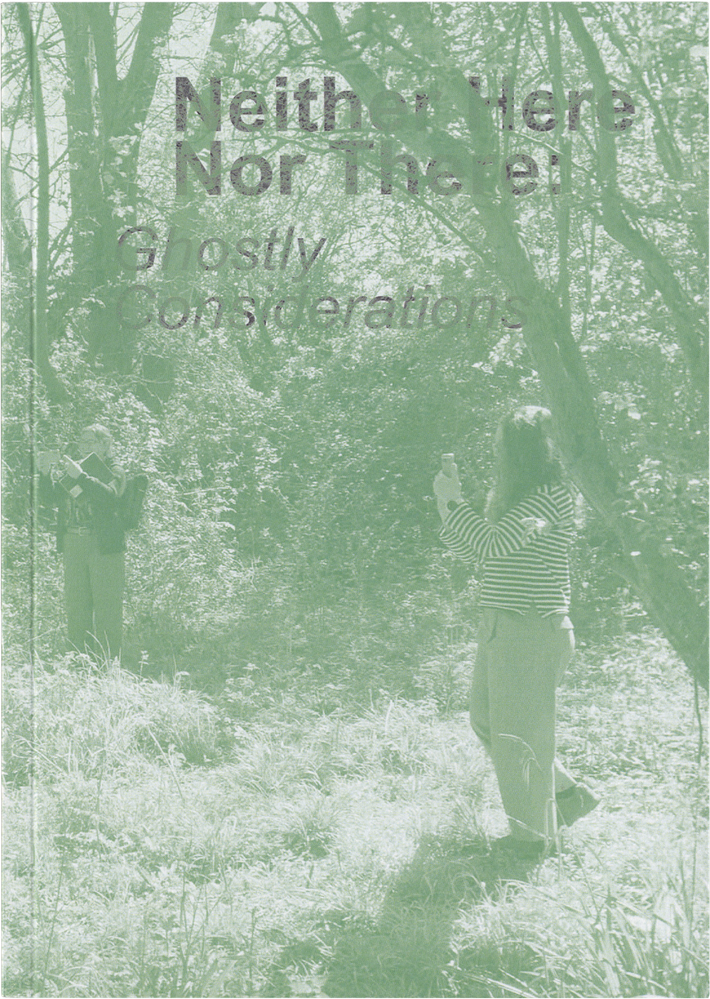
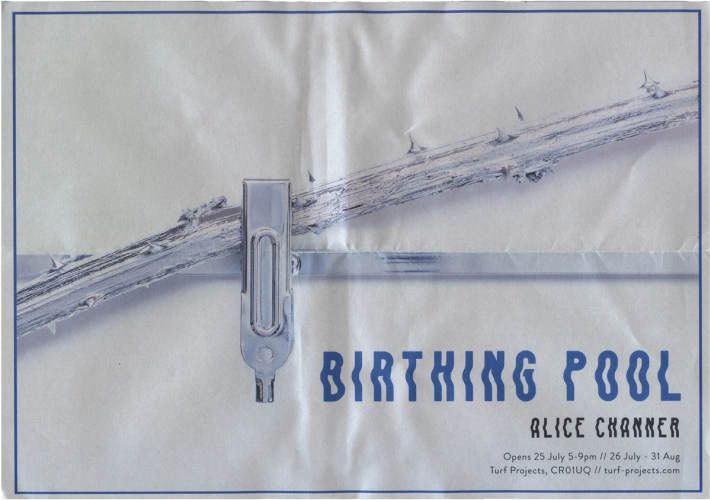
In the overworld I discover that other things are happening. A man whose friend is lost describes a journey through 1990s post-industrial England. There is moral scowling, shopping centres, Conrad’s Heart of Darkness, container ships and a search for utopia. I am attracted by the monotone voice, the quite boring details, the expanse of strangeness that human life manufactures. A Museum of Roadside Magic teaches us how to create our own universe if the one we inhabit doesn’t work for us. A woman does a reading in a small converted school room about violence, destruction, plants, her mother, her native Colombia. It feels like we are at the centre of the world, learning everything and nothing. Multiple, layered human voices reverberate through the vaults of an eight-hundred-year-old church. People sit hunched in pews, shrouded in sound which turns into a kind of textured, all-enveloping material. A blue atomic haystack inhabits a fifteenth century manor house, seductive, contaminated, dark. It smells of wild meadow and is restless, its toxic state pointing to the many inventive ways that we are destroying our planet. Nearby, a snake eats its tale while birds and trees inhabit the celestial heavens above.
The backdrop to these infinitesimal worlds exists in the form of thatched cottages made of Hamstone, a locally quarried, warm, honey-coloured Jurassic rock. Mullioned windows are dressed in wisteria, climbing roses and ivy. Buildings that seem to emanate from the land are linked by ancient lanes called holloways, formed over centuries by erosion and the movement of bodies across pliant earth. These holloways, they are a kind of flattened underworld worn smooth by horses, mythical beings and daily footfall. A butterfly settles on a nearby plant. The sun slides in to view. There is very little impression that all is far from well in the overworld beyond.
T S Eliot’s ashes are buried in a nearby churchyard. His body reduced to a mound of grey flakes that have now gone back to the earth. “In my beginning is my end” Eliot says in his poem ‘East Coker’. We must all go back to the earth – as bodies or ashes, but always, ultimately, dust.
I find a broken-looking trowel in the churchyard and wonder what would happen if I dug downwards from here. Would I encounter the underworld and eventually meet the other side of the earth? It is hard work at first (the trowel is almost useless), but then I am lost in a rhythmic motion and strange things begin to happen. I don’t see Hades - his helmet of invisibility saves him from this indignity - but I glimpse an array of amorphous bodies that look not exactly dead but certainly not alive. I exchange oxygen for methane and experience searing pain, heat, darkness. After what seems like either a millennium or a few seconds, I come up, gasping for air, in the southern Pacific Ocean. It is really cold, my jaw is frozen, slightly open, as I flail towards land, somewhere southeast of New Zealand.
I hitch a lift with a lost, mute soul (perhaps his name was Robinson) and arrive back at where I started. It’s a long journey and I take the opportunity to think about the soundscape of the underworld, as well as the ways that things rise and fall and are reborn (until they’re not). I understand with a kind of earthy, alarming clarity that everything is interconnected and that we are always at the beginning and end of things, from breath to dust.